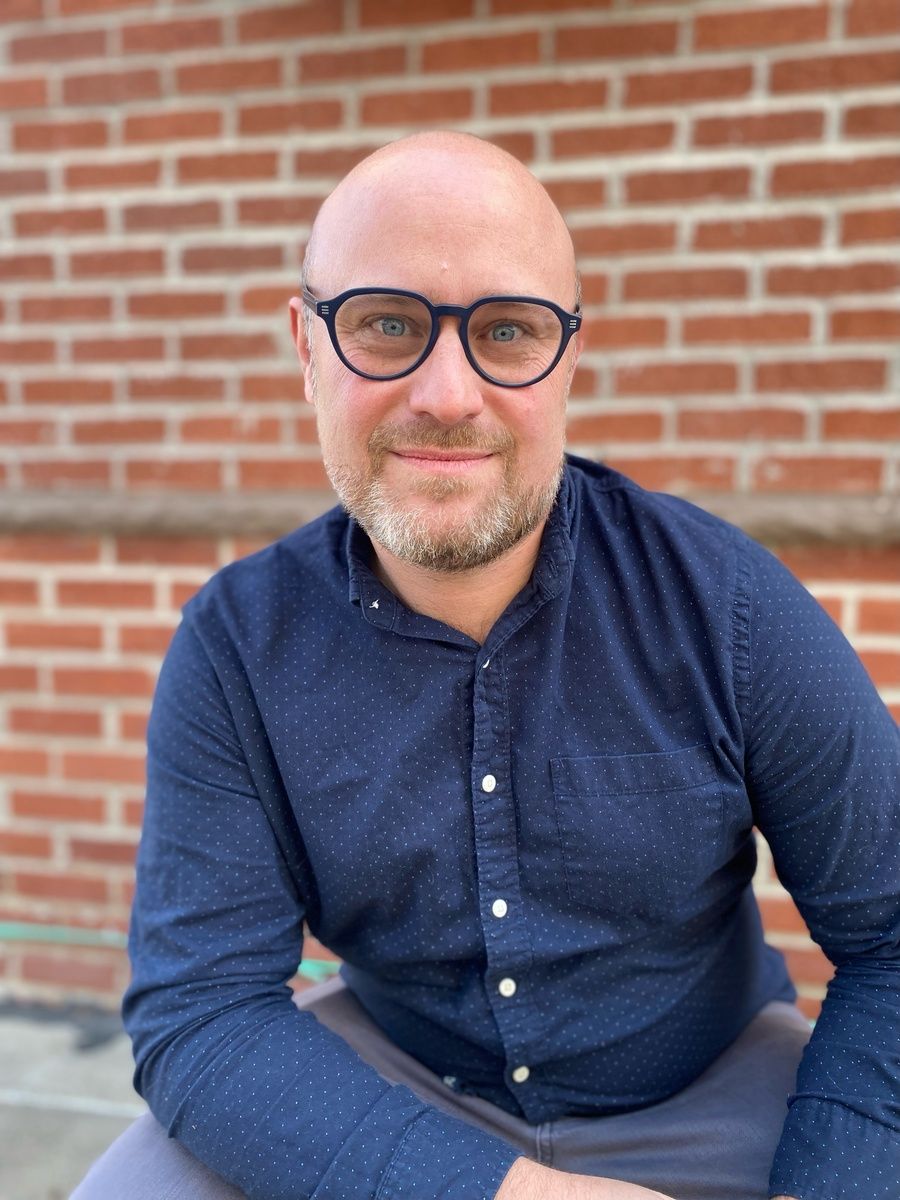

Source: CCA Metro
On most construction sites, a worker who suffers an injury faces a familiar set of challenges. There are medical appointments to schedule. Insurance claims to navigate. Time away from work. And often, a frustrating wait to get the treatment, testing, or benefits needed to begin recovering.
But at New Terminal One—the massive airport project rising at JFK—workers operate under a different system.
If a worker cuts a hand, develops a serious strain, or begins feeling ill during a shift, they don't have to leave the site and begin navigating the traditional workers' compensation process. Instead, they can walk directly into an on-site medical facility staffed by physician assistants, receive immediate treatment, and begin the next steps of their care.
If additional testing is needed, appointments can often be arranged within days rather than weeks. If a worker needs a few days off to recover, benefits begin immediately rather than after the traditional waiting period.
The program behind that approach is called Alternative Dispute Resolution, or ADR. Increasingly used on New York's largest union construction projects, the system aims to solve a challenge that has long frustrated workers, contractors, and owners alike: how to provide better medical care after an injury while controlling the rising cost of workers' compensation.
Available only through collective bargaining, ADR for workers' compensation began in New York with pilot legislation in the late 1990s that was eventually made a permanent feature of the workers' compensation law. In recent years, ADR has taken hold on some of the largest projects in the city and state.
Many of those programs are administered through a partnership between Ullico, the labor-owned insurance company, and NFP Construction & Infrastructure, a construction risk-management and insurance advisory firm that helps design and implement ADR programs.
According to Gary LaBarbera, president of the Building and Construction Trades Council for both New York City and New York State, roughly $14 billion worth of construction projects in the state are currently operating under ADR programs. Among them are New Highmark Stadium for the Buffalo Bills and several major public infrastructure projects.
"The idea behind ADR is actually to reduce the cost of insurance," LaBarbera said.
But unlike previous efforts to lower costs, he said, the program's success comes from improving care rather than restricting it.
At the center of every ADR project is an on-site medical facility. Workers who are injured—or simply feeling unwell—can receive immediate attention from medical professionals without leaving the project.
Marc Gnesin, Senior Vice President and ADR Leader at NFP, said that level of care is one of the program's biggest differentiators. New Terminal One's ADR program provides on-site physician assistants capable of providing care that would otherwise require a trip to an urgent care center or emergency room.
The system also eliminates one of the frustrations of traditional workers' compensation: delays.
Under New York's standard workers' compensation system, workers generally face a seven-day waiting period before receiving lost-time benefits. Under ADR, that waiting period is waived. Diagnostic tests that might otherwise take weeks to schedule can often be arranged within days.
By streamlining treatment and case management, workers receive care faster, avoid becoming lost in a complicated claims process, and can return to work sooner when medically appropriate.
Gnesin said some earlier ADR programs struggled to gain acceptance because workers viewed them as cost-cutting measures that limited care or choice. The current model, he said, was designed to deliver meaningful benefits for workers while also reducing claims costs.
The New Terminal One project has become one of the most prominent examples of the approach. ADR has become an important component of the project's workforce strategy, and the program provides on-site medical resources and coordinated healthcare services for workers who are injured on the job.
According to LaBarbera, the results have been substantial. At New Terminal One, he said, ADR has reduced claims-related costs and lost-time incidents by roughly 30 percent, generating millions of dollars in savings. Other projects have seen even larger reductions.
At the Park Avenue Viaduct project, for example, LaBarbera said ADR helped reduce lost-time incidents and claims costs by roughly 50 percent.
Gnesin said the program's success stems largely from changing what has traditionally been an adversarial process. Too often, he said, workplace injuries can become disputes over whether an injury occurred or how it should be handled. ADR aims to make that process more collaborative by prioritizing immediate care, clearer claims management, and faster resolution.
By improving access to care and reducing disputes, ADR programs have produced measurable savings. Across eight ADR projects launched since 2022, Gnesin said participants have seen roughly a 20 percent reduction in insurance costs associated with claims.
Craig Arneson, Vice President of Ullico Casualty Group, said the program succeeds because it benefits all of its major stakeholders.
"I really do feel like ADR is a win-win-win process," Arneson said. "It actualizes savings for the developer or owner, improves workers' compensation outcomes for contractors, and delivers better health care quicker to the workers."
LaBarbera said more owners are beginning to request ADR programs, while contractors are increasingly promoting the model to clients.
As owners search for ways to control costs and workers seek faster access to care, ADR appears poised to become an increasingly common feature of the state's largest construction projects.
"It's benefited the industry," LaBarbera said. "It's benefited the owners. It's benefited the members."