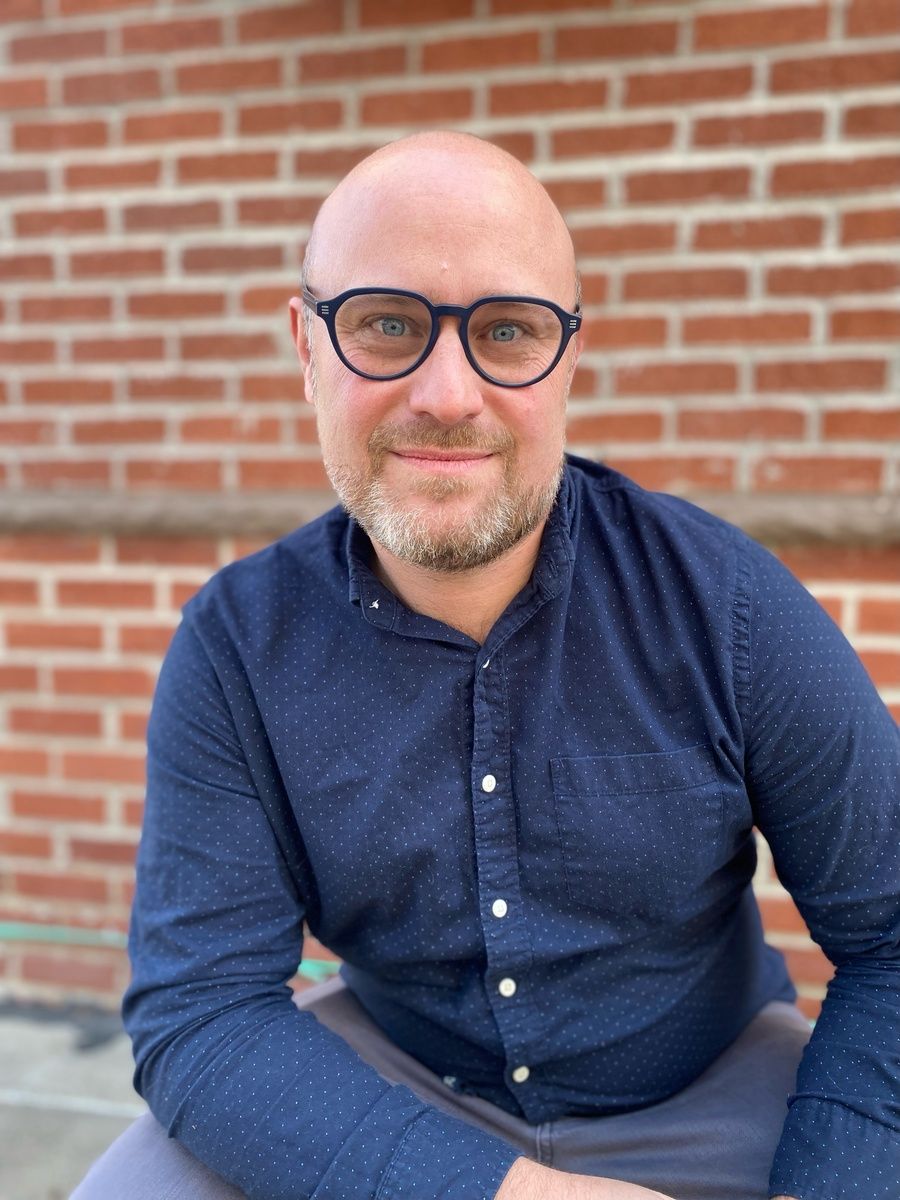

Source: CCA Metro
Moises remembers the moment everything went wrong.
On a construction site near Columbus Circle, he was helping unload sheetrock when the wheels of a heavy A-frame cart slipped into a gap between the hoist elevator and the platform deck. The cart tipped, and sheets of drywall began sliding toward him.
“My hand got stuck between the A-frames,” he recalled. “I couldn’t feel my hand. I was screaming for help.”
For several seconds, he thought his hand might be crushed.
Eventually he managed to wrench it free by pulling his glove off and sliding his hand out.
The foreman wasn’t on site. No ambulance was called. Instead, Moises says he was told to go to a clinic. He took the subway there with his injured hand wrapped and throbbing.
Doctors told him to rest for several days. But within a week, his foreman was calling repeatedly, asking him to return.
“They said I’d be doing light duty,” Moises said. “But when I came back, it was the same work again—lifting sheetrock.”
His finger still aches when the weather turns cold.
For Moises, it was just one moment in a much larger reality: the dangers of life working on New York City’s non-union construction sites.
Up Before Dawn
Moises arrived in New York a few years ago looking for opportunity, like many workers who enter the city’s construction industry.
He quickly found work on a non-union job site, earning about $16 an hour.
His day began long before sunrise.
Living in Yonkers, he would wake up at 3:15 a.m., make coffee and a sandwich, and begin the trip to Manhattan: a bus to the train, then the subway downtown. The commute often took an hour and a half each way.
Work officially started at 7 a.m., but workers were expected to arrive early.
“If you’re there at 6:20, they might tell you to start working already,” he said. “But you don’t get paid for that time.”
The shift ran until 3:30 p.m. Six-day workweeks were common. Sometimes seven.
“When we worked overtime, we still got the same pay,” Moises says.
By the time he finished work, commuted home, and attended evening English classes, there was little time left in the day.
“Sometimes on Sunday,” he said, “all I wanted to do was sleep.”
The Uncertainty of Every Paycheck
For many workers on non-union construction crews, financial instability can be constant.
Moises remembers weeks when paychecks bounced or were delayed.
Sometimes workers would deposit a check only to discover the account didn’t contain enough money to cover it.
“You go to cash the check and they say there’s no money there,” he said.
Other workers fared worse. Some waited weeks for missing wages. Others lost pay entirely when subcontractors disappeared or projects ended abruptly.
Moises’ experience reflects a broader pattern in the industry. Researchers at the Institute for Construction Economic Research estimate that between 75,000 and 125,000 construction workers in New York State are affected by payroll abuse or wage theft each year, often through misclassification as independent contractors.
The structure of many non-union construction projects can make accountability difficult. Layers of subcontractors separate workers from developers and project owners, leaving workers with few options when problems arise.
“Sometimes you don’t even know who your boss really is,” Moises said.
Working Without a Safety Net
Conditions on many non-union job sites can also present safety risks, according to workers and organizers.
Moises remembers installing fiberglass insulation on some projects without even a basic mask.
As workers handled the material, fine fibers floated through the air and clung to their skin and clothes. By the end of the day, the dust filled their throats and lungs.
“You breathe all that in,” he said.
Basic protections were often missing. Workers carried heavy materials up staircases rather than waiting for elevators. Equipment was sometimes poorly maintained, and supervisors were not always present on the site.
“You just have to do the work,” Moises said. “If you don’t do it, they tell you to leave.”
Cristian Batres, a council representative with the New York City District Council of Carpenters, says those pressures are common across the non-union sector.
Many workers feel they have little choice but to accept the conditions.
“Most of the people we talk to say the same thing: ‘I’m doing this because I have no option,’” Batres said.
Workers may face unstable housing, lack of healthcare, or financial pressures that make leaving a job difficult.
“They’re just trying to survive,” Batres said.
A Different World
After more than two years in the non-union sector, Moises learned about a union program that allows experienced carpenters to join through a skills assessment.
The change wasn’t just financial. On union job sites, he says, safety rules were enforced in ways he had never experienced.
When he rushed to complete a task the way he had learned on non-union sites, coworkers stopped him.
“They told me, ‘Slow down. Safety first.’”
Overtime was paid properly. Benefits were included. Paychecks arrived reliably every week.
Moises was soon able to get married and move into an apartment where he now lives with his wife.
The Workers Behind the City Skyline
New York City’s construction boom continues to reshape neighborhoods across the five boroughs. But the conditions under which those buildings rise can vary dramatically.
For Batres and other worker advocates, that difference highlights the broader debate about labor standards in the construction industry.
“Construction workers are building affordable housing, luxury buildings—everything,” Batres said. “But sometimes the person building it can’t afford to live there.”
Today, Moises still works in construction, but under very different circumstances than when he first arrived in New York.
Sometimes, high above Manhattan streets, he pauses for a moment and looks out across the skyline. Glass towers catch the light. Bridges stretch across the rivers. The city spreads in every direction.
“It’s a million-dollar view,” he said.
For years, he helped craft that skyline while struggling just to get by—and worrying about his own safety daily.
Now, he says, he’s finally building his own future inside the city he helps build every day.